The “N” is for “Nowledge”

As we still live in the vicinity of our old alma mater, my in-laws tend to get season tickets for hockey, for themselves, my wife, and I. It’s a way to stay connected to where we went to college, and oftentimes, the team is at least halfway decent. This season…is not one of those times. It’s a rebuilding year, sure (the team is mostly incoming freshmen), but our record is still pretty abysmal. Which, in a roundabout way, brings us to today’s word.

sieve, noun – a utensil used for straining liquid out of a substance

Learned from: Betrayal at Krondor (PC)

Developed by Dynamix

Published by Sierra On-Line (1993)

As with any sports team, there are a variety of traditions and in-jokes associated with the NMU Wildcats. There’s the, er…glowing endorsement of the university as a whole, in the title of this post; shouting “And Tech still sucks” when there’s one minute to go in a period; and most pertinent, chanting “Sieve!” and pointing at the other team’s goalie, whenever we score a goal.

In a recent game, we were actually doing pretty well for a change, so there was ample opportunity to do this chant. Which was actually pretty invigorating…until a college-age girl a row or two back loudly asked her friends “What does it mean when we shout ‘sieve’ after we score?” I mean, okay, if you’re not thinking about it, it might take awhile for you to come to the realization that it means their goalie is full of holes, and lets everything through. But as this girl’s friends stumbled over the explanation (and my wife turned around to spell it out), I came to the mortifying conclusion that these adults, who presumably had made it through 12 years of basic schooling and were now shelling out tens of thousands of dollars each semester for college…didn’t know what a sieve even was.

Granted, growing up, I think we usually just called them “strainers” in my house, but I still knew this word long before I was old enough to vote.

So, you’re probably asking how this all fits in with Betrayal at Krondor. Is it a cooking RPG? Because I’ve certainly played a few of those (Battle Chef Brigade, the Atelier series, to some extent). But no, Krondor was an open-world, standard fantasy RPG, trying to compete with the likes of The Elder Scrolls: Daggerfall, and generally falling short, as people actually remember Daggerfall.

I gather the game was based on the Riftwar novels, by Raymond E. Feist, though I’ve never read them, so I can’t say how it connects. Which also might explain why I don’t remember much about the plot–plus, I got the game for free, when Sierra was having some sort of giveaway for some reason.

I do remember a few choice things about Krondor though: First, it was surprisingly hands-on with some of its mechanics. In a lot of games, you might find a book about stealth, that your character reads and gets a stat boost–here, you can have someone teach you some tricks…and they actually teach you. I still remember the instructions to step with your heel, and smoothly pivot your foot down along the outside of the arch, so that you don’t step too firmly on the ground. A really cool touch, with unexpectedly real-world applications.

The other thing I remember is the chests. Rather than relying on just a lockpicking skill, or anything like that, many of the chests in Krondor were sealed with words. They’d have anywhere from 3 to 5 (possibly more) tumblers with various letters on them, and when you had them spell the right word, the chest would open. And that word might be the name of an important NPC or a place, and there might be clues around the chest. Or it might be a simple word like “sieve.” It was neat and different, and it clearly stuck with me more than most of the rest of the game.

I didn’t even realize how cool the box art was until today; like I said, Sierra was giving this away as a free download for some reason. But look at this!

Find your comfort food

There are times at my job, where I’m told to do things I’m not entirely comfortable with. I don’t mean like in a religious sense, or that I’m being harassed; more that this just doesn’t seem right to do in a given situation. Like, objectively. And because of the nature of my job, I can’t even talk to anyone about it–confidentiality and all that. I’m sure you’ve all probably had something similar crop up in your lives at some point. And at times like this, it’s important to have some sort of “comfort food.”

It doesn’t have to be an actual meal, though it could be. Rather, I mean something you can turn to when for whatever reason, you don’t have someone you can turn to. It should come as no surprise that for me, it’s games. Sometimes books. For you, it might be movies or music, gardening or cleaning, or any of a thousand other avenues that let you escape your problems for a while, and recover. Which brings us to today’s word.

balm, noun – something soothing or restorative

Learned from: Dark Wizard (Sega CD)

Developed by Sega

Published by Sega (1994)

As I may have mentioned in another post, I was one of those kids who actually pestered his parents into buying him a Sega CD (and later, a 32X) for Christmas. I didn’t actually own many games for them, but I rented damn near everything my local video store had in stock at one point or another. Dark Wizard is one of the titles that stuck with me the most after all these years–perhaps a bit ironically, considering how generic it sounds.

I’d always had a love of turn-based tactical/strategy RPGs, ever since cutting my teeth on Shining Force, but Dark Wizard took what I knew and elevated it to a level of complexity I hadn’t seen before: Four different generals you could pick from, each with their own unit types and stories. Terrain that had an entire chart, showing how it affected different types of units. Territory you needed to sacrifice some of your units to defend, even when you were pushing forward on the battlefield. Compared to the simplicity of “forests give +20% defense” in other games I played, this was a lot to keep track of. And I loved it. I don’t think the story was anything to write home about–something about an evil priest trying to resurrect a dark god–but the strategy elements were really engaging.

Oh right, the word. It seems to be something of a trend for different RPGs to have different names for their healing spells and items. Cure, dia, vulnerary, etc. Balm was the term for the basic healing spell in Dark Wizard.

But yeah, find your comfort food, your welcome distraction, your balm. You never know when life’s going to throw something at you that you can’t talk about, and things like this can really help.

Even the cover art looks a bit generic–though kudos for Sega of America keeping the overall anime look to the characters.

You can’t win if you don’t play

It’s Christmas Eve, and since I have the day off, I thought it would be a fine time to do an update. I couldn’t think of any seasonal words off the top of my head, but I and the gents over at the Friends Occasionally Not Disagreeing podcast recently took a look at the indie smash hit, Balatro, which made me think back to a much, much older poker game I played as a kid. It’s back-to-back Intellivision games with today’s word.

ante, noun – the minimum bet required to play a round of gambling;

verb – to put forth the minimum bet required to play a round of gambling

Learned from: Las Vegas Poker & Blackjack (Intellivision)

Developed by APh Technical Consulting

Published by Mattel Electronics (1979)

People sometimes make a fuss about how loot boxes in games today are essentially gambling, but when I was a kid growing up on the mean streets of Not Having A Nintendo, I was learning the ropes of actual gambling. And I know “ante” generally refers to card games, but I’m stretching the definition a bit, considering you also need to pay before shooting craps, or spinning a roulette wheel.

Las Vegas Poker & Blackjack was never my favorite game on the Intellivision, but I did spend plenty of afternoons alone or with my father, trying to beat the dapper, yet shifty-eyed dealer at his own game. The game offered blackjack, and several variants of poker, all of which I ended up with at least a working knowledge of, while I was still in elementary school. Despite this early exposure, you might be relieved to know that I did not grow up to have a gambling problem. Maybe being introduced to card games at the same time as games where I could shoot aliens, or explore dungeons showed me there were more entertaining options out there. Compared to fighting monsters and venturing to different worlds (or, decades later, playing a roguelike version of poker), the prospect of sitting in a smoke-filled room with a bunch of strangers and (likely) losing all my money seems downright boring.

Hey, Player 1… Nice.

Do you read me?

Recently, my friends and I over on the Friends Occasionally Not Disagreeing Podcast did a review of Faith: The Unholy Trinity, which has voice work that reminds me a lot of the synthesizer module they made as an add-on for the Intellivision. That is to say, everything sounded garbled, heavily synthetic, and only borderline-intelligible. Here, that was by design, but back in the day, it was the best they could do. Which brings us to today’s word.

gauge, noun – an instrument displaying a readout for some value

Learned from: B-17 Bomber (Intellivision)

Developed by Mattel

Published by Mattel (1982)

Based on the fact that Mattel was trying to add actual voice lines to games way back in 1982, you could say they had lofty ambitions. Even the base Intellivision was ahead of its time, with an actual analog pad instead of a joystick or 4-directional d-pad, and an entire phone’s worth of buttons, allowing for games with a staggering amount of options for the time, from displaying maps, to managing weapon loadouts, to pulling up gauges for things like altitude, pitch, and roll (I thought yaw was included here too, but I appear to be mistaken; I must have learned that one directly from my father).

Anyway, B-17 Bomber puts you in the role of the pilot (and bombardier, and gunners) of the titular plane, tasked with hitting various targets in WWII Europe. All the while, enemy fighters would be assaulting you, forcing you to worry about ammo management, fuel management, and timing the dropping of your bombs (not to mention how many bombs to load in the first place), and then trying to return home in one piece. Again, this was 1982, ambitious stuff in a time when most games weren’t any more complex than “avoid the ghosts in the maze and eat all the dots.”

I was never terribly good at this game, but I would occasionally load it up, just to hear the technology of the time croak out “Bee se-ven-teen Baw-mer!” at the title screen. Those were simpler times.

Behold, the IntelliVoice module! You’d plug this unwieldy thing into the cartridge slot, then jam a cartridge into the right-hand side, and if you were lucky, it would load. Mattel: Being Sega before Sega was Sega!

Hit me with your best shot

It’s Thanksgiving here in the US, which means long hours in the kitchen, eating enough calories to feed a small, third-world country for a week, and then burning all those calories doing everything humanly possible to avoid uncomfortable political arguments with family members. Especially this year. But aside from dodging uncomfortable topics, the centerpiece of the meal is turkey. Usually just bought from the store, you can get permits to hunt them in some areas. Which brings us to today’s word.

blunderbuss, noun – a large-bore firearm, precursor to the modern shotgun

Learned from: American McGee’s Alice (PC, Mac)

Developed by Rogue Entertainment

Published by Electronic Arts (2000)

Playing this, I had no real idea who American McGee was. Apparently he worked on the Doom and Quake series, but the only name I really knew from id Sofware was John Carmack. At any rate, the idea of a twisted, grimdark take on Alice in Wonderland, imagined as a third-person action game was enough to hook me, regardless of who this guy was.

American McGee’s Alice takes place years after the books, with Alice in an insane asylum, the only survivor of a house fire that awakened her from her earlier dreams of being in Wonderland. Perhaps as a psychological break, she finds herself beckoned back through the looking-glass to save Wonderland from the Queen of Hearts’ machinations. Like I said, pretty grim.

The gameplay however, was a lot of fun. The environments were colorful, the platforming was well-designed, the enemies were all dark versions of classic characters, and there was a nice variety of tools with which to dispatch them. Alice’s primary weapon was a knife, but there were more series-specific weapons like playing cards and a croquet mallet shaped like a flamingo. Then there was the blunderbuss.

This was the strongest weapon in the game, but it only fired one shot. I don’t remember if it took forever to reload, or if ammo was incredibly scarce, or both, but it would kill most enemies in one hit. And like everything else in this game, it was hyper-stylized, with a barrel that flared out at the end to comic proportions, as if you were shooting buckshot out of a gramophone.

Happy Thanksgiving. Just remember not to give any table scraps to your cat–no matter how emaciated he might look.

Hope you enjoy the series finale

It’s July 4th (Independence Day, for those of you outside the US), as I write this, and I find myself in a rather melancholy state of mind. This has always been one of my least-favorite holidays to begin with–it’s loud, the events are always crowded, and most of the festivities take place outside during the hottest stretch of the year–but given recent events, I feel like there isn’t much reason to celebrate at all. Er…I mean, everything is totally fine here, and we definitely haven’t just handed the president the powers of a king, which the felonious maniac whose cult will probably elect him in November will wield to punish any opposition once he’s back in office, and never abdicate the throne. Everything is great. Just great. How are you? Let’s talk about eagles.

eyrie, noun – an eagle’s nest

Learned from: Shivers (PC, Mac)

Developed by Sierra On-Line

Published by Sierra On-Line (1995)

I really kind of miss Sierra On-Line. You could argue that their adventure games weren’t as polished as the ones made by Lucas Arts (also RIP), but man, were they memorable. Take Shivers, for example. The game starts with you, a teenager, being dared to spend the night inside Professor Windlenot’s Museum of the Strange and Unusual–a Ripley’s Believe It or Not type of place, that never finished construction after the eponymous Prof. Windlenot disappeared under mysterious circumstances. Being that it was abandoned, you have to get creative about finding a way in, and once you’re inside, you find yourself trapped with the evil spirits from one of the exhibits that likely killed the professor. From there, it’s a struggle for survival as you make your way through all the weird (sometimes cursed) stuff Windlenot collected over the years, searching for a way to contain the spirits and get out alive.

Part of the fun of Shivers was never quite knowing what you’d find in the next room. You’ll go from exhibits about torture devices, to ancient Egypt, to an entire section devoted to optical illusions, to strange things found in nature–like the world’s biggest eyrie. As I remember, it takes up most of the room it’s in, and I was always worried something was going to reach/jump out from inside it, as I edged my way around its massive bulk. But it was just one memorable scene from a game that was full of them. Sure, it’s a bit dated at this point, but it’s still worth a play.

And, it’s like six bucks on GOG.com: https://www.gog.com/en/game/shivers

Not quite eating crow…

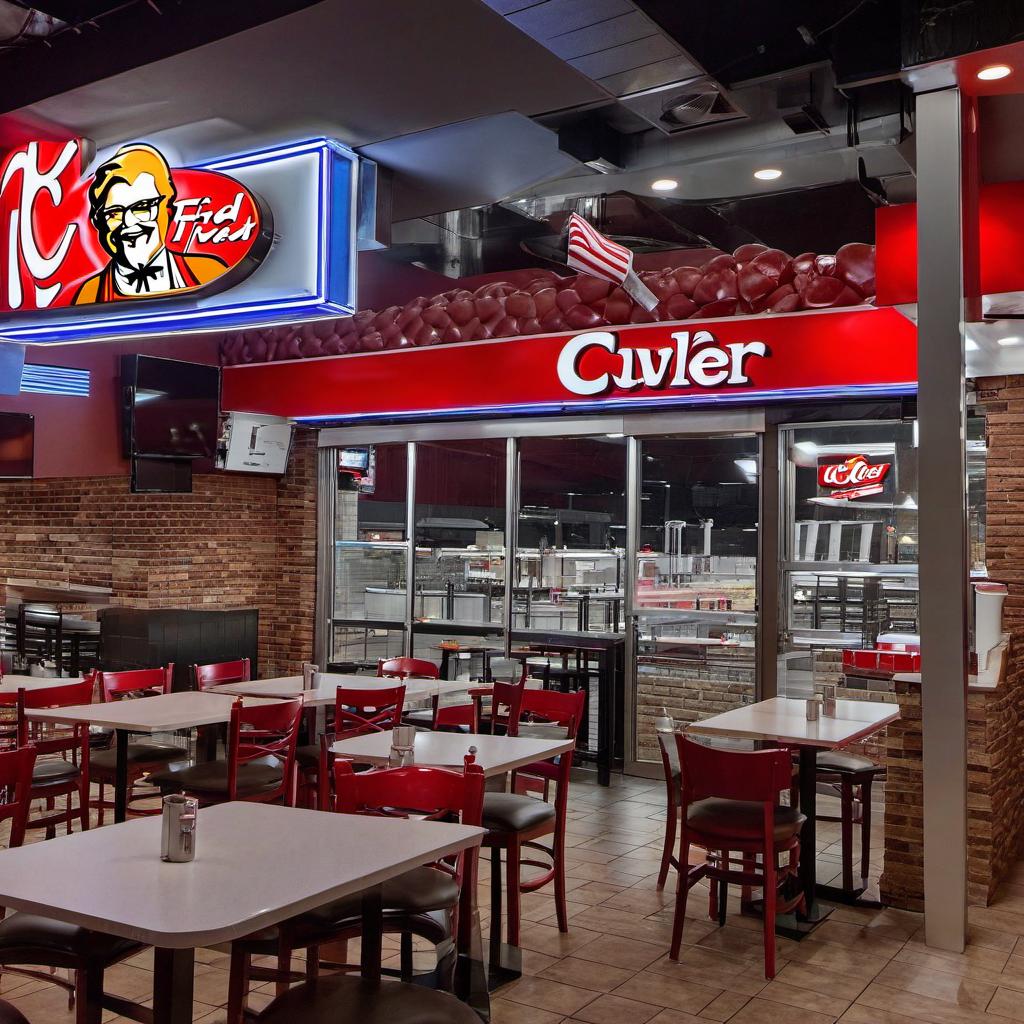
In my neck of the woods, there’s a restaurant chain called Culver’s, famous for their “concrete mixers” (custard shakes), and burgers billed as “butter burgers.” Delicious, but probably even more horrible for you than your average fast food burger, which is saying something. That said, I always assumed that the chain was just named after someone–and it is. But it turns out “culver” is also an actual word, and now that I know what it means, I’ll never be able to look at the restaurant the same way again…

culver, noun – a dove or pigeon

Learned from: Elden Ring (PC, Playstation 4, Playstation 5, XBox One, XBox Series X/S)

Developed by FromSoftware

Published by Bandai Namco Entertainment (2022)

FromSoftware games are known for being punishingly difficult, but also pretty dang weird sometimes. Case in point: Rennala, one of the main bosses of Elden Ring. When you first face her, she’s floating in the air, surrounded by a horde of half-formed…daughters, I guess? And she’s cradling something in her arms, cooing at it and calling it her “little culver.” It’s hard to really make out just what it is at first, but the whole situation is a bit creepy.

Regardless, I now have the irrevocable connotation that there’s a fast food chain that’s essentially called “Pigeon’s.” And I want to note, I in no way mean this to imply that Culver’s serves burgers made from pigeon meat (AKA: squab, so you’re getting a two-fer, today!). It’s just an unfortunate, and kind of amusing coincidence that their name happens to have another meaning.

KFC, however, I have my doubts about. (Pardon the AI art)

Rude awakening

For awhile, my cat had a habit of poking around in my closet at night when she got bored. There’s no door on it, just a curtain that she can easily get through, and she sometimes makes a lot of noise, messing around with the stuff I have stashed there. So, I recently stacked some boxes in front, to keep her out, which worked…for awhile. The other night, she somehow clambered her way over them, and woke me up. I get up, turn on the light in there, and as soon as she saw me, she seemed to know she’d done something wrong and tried to get out…and got stuck between one of the boxes and the doorframe. When I reached over to shift the box, she panicked, and in her flailing of paws, she tore several large gashes in my leg. Which brings us to today’s word.

laceration, noun – a rough cut or tear with ragged edges

Learned from: Half-Life (PC, Mac, Playstation 2)

Developed by Valve

Published by Sierra Studios (1998, PS2 version in 2001)

Remember back when Valve made games? Pepperidge Farms remembers. And honestly, Half-Life and Diablo were the main titles that got me into PC gaming back in the ’90s. While the roguelike nature of Diablo scratched my itch for fantasy, Half-Life just looked so much better than anything else in its genre. I’d played Wolfenstein 3D a little at a friend’s house, and Doom on my 32X (arguably the worst way to play it, since it wasn’t even the whole game), and they were fun, but Half-Life looked to be doing something different; it actually wanted to tell a story, with characters, and set pieces, and weapons located in places that made sense, rather than just floating around in the air.

I devoured every article and preview of this game I could get my hands on, leading up to its release, and when I finally got my hands on it, I wasn’t disappointed. From the opening, in-game credit sequence, to the unfortunate amount of platforming during the climax in Xen, I was engaged, making my way through hallways filled with hostile soldiers and three-armed aliens that shoot lightning. And all the while, my constant companion was the voice in my HEV (Hazardous Environment) suit, giving me constant updates on just how badly beaten up I was, from suffering minor lacerations to being dosed with high levels of radiation. Sure, in the end it all added up to how much health I had left, but it felt so much more immersive.

And after that early morning run-in with my cat, I can confidently say she’d give any headcrab zombie a run for its money.

This is Anji. Don’t let her coyness fool you; she is sharp.

Cryptic messages in the Lands Between

As I write this, Elden Ring‘s DLC, Shadow of the Erdtree, drops in a little over a month, so I figured I should really get back to Limgrave and sharpen my skills. And, you know, maybe actually beat the game. Which brings us to today’s word.

baldachin, noun – the cloth canopy above a throne, or carried above an important person

Learned from: Elden Ring (PC, Playstation 4, Playstation 5, XBox One, XBox Series S/X)

Developed by FromSoftware

Published by Bandai Namco Entertainment (2022)

Early in the game, you unlock an area called the Roundtable Hold which acts as a sort of hubworld populated by a diverse array of NPCs. And in true FromSoft fashion, most of them are…ambiguously helpful at best. One of the, Fia, is a woman who came to be bound to this place due to “circumstances.” She also offers hugs, claiming she’ll receive the warmth of a warrior in exchange for what is surely a “baldachin’s blessing.” Possible minor spoiler: Hugging her might not be an entirely good thing to do.

Otherwise, Fia is pretty innocuous, and seems a rather sad figure. Not that anybody in a FromSoft game ever comes across as terribly happy, but there’s a special melancholy to her. Curiously, she doesn’t seem to have anything resembling a baldachin in her room, which makes her initial claim even more confusing. But while there’s no canopy, she does have a mirror in her room that the player can use to change their appearance, so she’s got at least some accoutrements.

FREE HUGS!

Don’t let it bug you

It’s been a long, kind of weird week at work. A lot of strange transactions that I’m tempted to blame on the upcoming eclipse, the same way people blame weird behavior on the full moon. But one thing that stood out against the craziness was something as simple as a shirt one of my coworkers was wearing the other day: It was basically black, but had this interesting green and purple iridescence to it, that brought to mind a beetle’s shell. Which, after a few detours, brings us to today’s word.

carapace, noun – the shell of an insect or other arthropod

Learned from: Lunar: The Silver Star (Sega CD)

Developed by Game Arts

Published by Working Designs (1993)

For as much as I love RPGs, I never really owned many of them as a kid. Aside from this, The Ancient Land of Ys on my Apple IIGS, and if you count action RPGs like Landstalker, most of my exposure to the genre was from my local video rental store (thanks for the memories, Major Video!). And they didn’t really have a ton of Sega CD games. But I’d begged my parents for the clunky Genesis add-on (as I would again a few years later, for the 32X, much to my lingering chagrin), and I wanted to make use of it. And Lunar looked amazing, from the previews in the magazines. I think I actually had to do a mail order for it out of an ad in one of those same magazines once I’d saved up the money, because the Internet didn’t exist in any real capacity yet, and it turned out Major Video wasn’t the only place that barely carried Sega CD games.

I remember checking our mailbox every day, afraid someone would steal something that was so hard to acquire if I wasn’t vigilant. And when it finally arrived, my 10-year-old mind was blown. The sprites looked crisper, the world was huge, it had an opening cutscene–with a theme song! (Which I still mostly remember to this day, actually.) I knew I’d made the right choice in tracking this game down.

Looking back at it all these years later, objectively Lunar is a fairly run-of-the-mill 16-bit JRPG, with a questionable translation (e.g. there’s a Wheaties reference at one point), an unremarkable overall plot, and some admittedly nice art. But at the time, I had a blast exploring its vast world, filled with bizarrely modern humor. Even when I expected that world to be more cohesive and immersive than it ended up being. Case in point: the carapace armor.

This was back in the day when games still came with (occasionally well-illustrated) instruction manuals, and reading through them on the ride home from the store, or in this case, simply before playing, was part of the experience. So when I saw that carapace armor was made from “shells of bizarre creatures on the southern continent,” I got it in my head that I shouldn’t wear that armor in that area, because I thought parading around wearing the corpses of the native inhabitants wouldn’t be a great idea. It…never became an issue–though there was some equipment-based, outside the box thinking they put in toward the end of the game, in a sequence that’s one of the game’s shining moments. So I was actually sort of on to something, in a roundabout way.

It’s weird that a lot of modern JRPGs have actually regressed in how they display gear. In the ’80s and ’90s, even if equipping new armor or weapons didn’t necessarily change the look of your character, they usually had unique sprites in your inventory. Now, a lot of them just have generic helmet or sword icons, with names by them. Sad, really.