Can a metaphor be a single word?

A rhetorical question, really; the answer is yes, but it’s generally harder to accomplish. Today’s word feels like an apt descriptor of…well, a lot of what’s going on lately, if you stretch it a little.

purulent, adj. – filled with, or oozing pus

Learned from: Cronos: The New Dawn (PC, Mac, Nintendo Switch 2, Playstation 5, XBox Series X/S)

Developed by Bloober Team

Published by Bloober Team (2025)

People sometimes ask me why I like horror games. “What do you find so appealing about being scared?” “Do you like watching terrible things happen to people?” Etc. and so on. Being scared can be thrilling, but I’d argue it’s the perseverance over terrible situations that’s more of a draw than witnessing them on their own. But the real answer is, in horror games (the good ones at least, that give you some agency aside from running and hiding), you can face the awful things in the world and beat them to death with a two-by-four. It’s a nice contrast to real life, where it feels like all we can do is watch powerlessly as everything just gets progressively worse. And if you have any doubts about the world ending, just look at the fact that Silksong finally came out, and we got a Silent Hill sequel that isn’t absolute dog water. We just need Valve to shadow drop Half-Life 3, and the final seal will be broken.

But today, I’m not here to talk about any of those games. Cronos: The New Dawn is a really weird, and surprisingly excellent psychological/body horror game from a studio I’d nearly given up on after the clunky and disappointing Layers of Fear, and the pretty-but-shallow The Medium. You play as a Traveler from some point in the future, diving backwards through time to…acquire certain individuals present during the outbreak of a horrible mutagenic plague that destroyed the world for…uh…reasons. I don’t want to spoil anything, because experiencing this bizarre, unsettling mindfuck of a story firsthand is actually a big part of the fun. It shouldn’t come as any surprise though, that this plague is of the icky, goopy, body-deforming variety, with early medical reports tactfully describing the horrors unfolding with terms like “purulent lesions.”

I know that Silksong stole pretty much all the thunder in the gaming scene as of the time of this writing, but there are other games that have come out recently which also deserve attention if the reviews are any indication. Looking forward to trying out Hell is Us and Silent Hill f after I finish Cronos. I’ll get to Silksong eventually, so long as the “highly unusual” meeting of hundreds of generals in Virginia next week doesn’t in fact usher in World War III….

I’d almost prefer an anomalous, reality-warping plague, personally.

Right back where we started

Well, as everyone and their grandmother knows, Hollow Knight: Silksong finally dropped this week. I haven’t started playing it yet, because there are other games that had release dates set for around this time (before the big announcement overshadowed everything), and I feel they deserve attention too. Currently, I’m playing Cronos: The New Dawn, but before that came out, I was actually playing another metroidvania that also released this year. And even though I haven’t played Team Cherry’s latest offering yet, I’m confident in saying this game is no Silksong. Which brings us to today’s word.

oloid, noun – a three-dimensional shape made by connecting two perpendicular circles joined at the center, with a curved surface

Learned from: Shadow Labyrinth (Nintendo Switch 1/2, PC, Playstation 5, XBox Series X/S)

Developed by Bandai Namco Studios

Published by Bandai Namco Entertainment (2025)

Around a year ago, Amazon decided to fund an anthology series based around video games, called Secret Level. The selection of games was…eclectic, to say the least, ranging from Mega Man, to Spelunky, to Unreal Tournament of all things, to some Chinese mobile game that was probably only on there because Tencent helped fund the show or something. And then there was the Pac-Man episode…

Certainly the most divisive (and arguably most interesting) of the offerings, this episode reimagined Pac-Man as a weird, grimdark, post-apocalyptic tale of manipulation and survival. It was truly bizarre, and to this day I still don’t know if I could call it a “good” episode or not, because it’s so definitively not Pac-Man. It’s like if they decided they wanted to make a gritty crime drama exploring the seedy underbelly of society focusing on prostitution and drug addiction, and decided to just call it Animal Crossing. So, imagine my surprise when I discovered this episode was actually a teaser for where Bandai Namco were planning to take the Pac-Man games, going forward.

Enter Shadow Labyrinth, which is somehow just as bizarre as the teaser, while simultaneously managing to be dull and unremarkable. The protagonist is still a nameless swordsman/clone(?); Pac-Man/Puck is still an untrustworthy little biomechanical horror; eating things to survive is still the focus…but it’s all wrapped up in a bland and at times nonsensical package.

It’s bland, because it really feels like a Flash game from the 2010s, with how the characters move (yet it somehow struggles to run on the Switch in handheld mode). Also, because some of the levels are way too long and same-y. Nobody needs to run through the same giant tree for that many hours, fighting the same unnamed tribesmen who rappel off of ropes from higher up over and over again.

It’s bizarre, because there’s some kind of interstellar war going on in the midst of all this, as told through epistolary format via “memories” you can collect of a character I don’t think I met during my time playing. Also, Shadow Labyrinth is I guess part of some kind of shared universe(?!) of games that Bandai Namco is trying to establish, what with a planet named Xevious, and references to other games later on. I stopped playing before I got beyond the Xevious part. Also before I got to any explanation of what the oloid is that shows up after you beat certain enemies. It seems important, and it probably gets explained later on, but the lore is so convoluted that I stopped caring. Maybe I’ll get back to it after I play Silksong, but I know it’ll feel even worse by comparison.

I figured it would probably be easier to show you one of these things, rather than try to describe it at length.

You zagged when you should have zigged

I’m reading a book right now about how a lot of the discoveries and inventions in math and science that are traditionally attributed to the ancient Greeks might very well have actually come from other parts of the world. It’s thought-provoking stuff, and the book’s called Lost Discoveries by Dick Teresi, if you’re curious. But I’m on a section about Mesopotamia right now which brought to mind today’s word.

ziggurat, noun – a stepped pyramid

Learned from: Quake (PC, Playstation 4, Playstation 5, Nintendo Switch, XBox One, XBox Series X/S)

Developed by id Software (Nightdive Studios for the PS4/5, Switch, and XBox One/ Series X/S)

Published by GT Interactive (1996, 2021 for modern consoles)

Quake was a game I took awhile to get any good at, namely because it was the first first-person shooter that let you look up and down. Doom and its clones never gave you that option, and at the time, I went through at least two different control schemes before landing on the now-standard keyboard & mouse. It was new territory, and I’d always played other FPSes with just a keyboard–were you supposed to bind a couple keys to look up and down? Or was there a way to somehow translate all the inputs to a joystick? (It worked for Descent.) It seems laughable to say it now, but using a mouse for looking around didn’t even seem intuitive at the time. And I barely had access to the Internet back then, so I couldn’t just Google (or Lycos, or Altavista) “how the hell do you aim in Quake?”.

As such, my early forays into Quake were…frustrating, to say the least. If you’re a PC gamer, and you think aiming on a controller is bad, imagine trying to do a rocket jump by hitting K to look down while in the air, then smacking Ctrl and the space bar at just the right time, to get it to work, and then adjusting your aim back up with I, and trying to see where you’d land. Now, imagine trying to do anything with that kind of control scheme in a secret level with about 1/4 gravity.

That was the Ziggurat Vertigo, a hidden level built around, you guessed it, a pyramid. Even a regular jump would send you soaring a good distance up the central structure, and having any idea where you’d come down using just a keyboard to look was damn near impossible. And when most of the area that isn’t pyramid is submerged in lava, well…you can guess how that went. I loved the idea of a level that messed with something as basic as gravity (Again, these were the early days of FPS games. I remember finding a fan patch later on that actually made water transparent, and it blew my mind!), but man was it an infuriating experience until I discovered the magic of mouse-aiming.

Okay, I swear this thing was taller when I played this as a teenager; a jump may have actually carried you all the way over the top. Also, the damn thing isn’t even stepped! False advertising!

Upside down

As I write this, it’s May 2nd, 2025. If you’re in the United States, that means it’s 5/2/25: a number that looks the same if you flip it upside down, at least in certain typefaces, and so long as you ignore the slashes and the first two digits of the year. If you’re in other, saner parts of the world that list the date in a more sensible day/month/year order, then this happened back in February. Sorry, we Americans do a lot of things in the stupidest way possible. Anyway, this brings us to today’s word.

strobogrammatic, adj. – something, as a number, that appears the same upside down as it does right-side up

Learned from: Lorelei and the Laser Eyes (PC, Playstation 4, Playstation 5, Nintendo Switch)

Developed by Simogo

Published by Annapurna Interactive (2024)

I’d always thought that numbers that looked the same upside down were neat–I mean, who didn’t spell out “BOOBIES” on a calculator at some point as a kid? Though in that case, it’s not a true strobogrammatic number, since the result isn’t identical to how it looks right-side up. Or like when we got a verification key fob for one of the stations at work, and I inadvertently read it upside down and got us locked out of the system.

Anyway, Lorelei and the Laser Eyes pulls a lot from real-life escape rooms, being full of number and word puzzles, some of which are strobogrammatic. The game, itself, is…weird. It’s like if you threw Twin Peaks, The Twilight Zone, Clue, and an international film festival into a blender, and topped it with a dash of The King in Yellow. It casts you as an artist(?) called to a remote mansion at the behest of an eccentric filmmaker, who wants to use your talents to create a truly transcendental work of art that may unmake reality itself…maybe.

Or maybe not. It’s a very surreal game that’s open to interpretation nearly every step of the way. I don’t want to say much else, because it’s very much worth playing. It’s a very unique, memorable narrative that stands out among…pretty much anything else out there.

It works with words sometimes, too! Turn this upside down, and it spells “abpa.”

When you boil it down

If you’ve been on the Internet at all this week, I think it’s statistically impossible that you haven’t heard about the Oblivion remaster. I have mixed feelings on it, but the original did teach me some words, so let’s get that out of the way first.

alembic, noun – an obsolete device used in distillation

Learned from: Elder Scrolls IV: Oblivion (PC, XBox 360, Playstation 3, Playstation 5, XBox Series X/S)

Developed by Bethesda Game Studios

Published by Bethesda Softworks (2006, 2025 for the remaster)

Alchemy can be a big part of Elder Scrolls games if you want it to be. You can start with stuffing random toadstools in your mouth, and end up with an entire collection of beakers and tubes to distill more potent tinctures.

There, I’ve got the word out of the way. Now I want to talk about this remaster, starting with the good: It’s more or less an entire remake from the ground up, and it looks fantastic…and it costs $50. In an age where Nintendo is selling remakes of 8 year old games for $80+, this game that’s old enough to vote looks better than the shinier versions of Zelda, undoubtedly took more work, and is selling for at least thirty bucks less. That’s admirable, and I think more people should be talking about it, because it’s selling like hotcakes and it blows Nintendo’s bullshit pricing out of the water.

Unfortunately…it’s selling like hotcakes. Look, the industry is positively drowning in remakes of games we’ve already played. And the hotcakes sales of Oblivion Remastered is only adding weight to that trend. Plus, there are other games coming out–including some very, very good ones this very week–from indie developers who could really use the sales.

Want another RPG? Clair Obscur: Expedition 33 has been incredible, just in the few hours I’ve gotten to play of it. Gorgeous world. Likeable and well-written characters. Engaging combat. Surprising emotional notes. Also $50.

Is horror more your jam? Post Trauma looks to be a decent stab at the Silent Hill formula, and came out the same damn day as Oblivion Remastered. I’ve seen no one talking about it–and yes it’s a different genre, but that doesn’t stop all the attention on the Internet from being on Oblivion. Oh, and it’s only $15, and I’m sure the developers would love to make another sale or two.

Hell, one of the creators behind Hundred Line: Last Defense Academy, a mix of visual novel and turn-based tactical RPG from the minds behind Danganronpa and Zero Escape, has reportedly sunk his life savings into this project. And here comes Oblivion Remastered to possibly drive him into poverty. This is the most expensive, at $60, but also potentially the most distinctive of the three I mentioned.

Look, I’m glad people are enjoying revisiting a game they grew up with, or discovering it for the first time, and I’d never tell them to stop having fun. But I really feel like I need to highlight that other games do exist, that actually have original concepts and fresh ideas. Just…look around at what else is out there? Please? Bethesda doesn’t need your money as much as some of these smaller developers.

Everything old is new again

Pixel graphics! ’80s references across all of popular media! The stock market crashing! Retro is in, baby, and it’s only a matter of time before 3D glasses make a comeback in movie theaters again…assuming theaters survive the streaming wars. But hey, paying way too much to go see a movie in dirty room full of loud people is totally retro too, so maybe there’s hope! Anyway, this all does lead us to today’s word.

anaglyph, noun – an image printed in two different colors overlayed across each other, to give the illusion of being in three dimensions when viewed through special glasses

Learned from: Balatro (PC, Mac, mobile, Playstation 4, Playstation 5, Nintendo Switch, XBox One, XBox Series X/S)

Developed by LocalThunk

Published by Playstack (2024)

Balatro, if you’ve been living under a rock for the past year, or you’re reading this in the future, is a deconstruction of the roguelike deckbuilding genre, where there are no monsters, no dungeons, no trips across the stars–just poker. Your cards are literal playing cards that can be modified in various ways to give more points, generate more money, trigger multiple times, generate other cards, etc. It’s a game that you really have to play to understand its appeal, but it’s simple, addictive, and worth every penny.

As you play and learn winning combos, Balatro offers you ways to up the challenge, from decks that are missing cards, to higher stakes runs that impose restrictions on what you can do. But the further you go, the more you unlock, and beating the game on the “black chip” difficulty unlocks the Anaglyph Deck, which gives you a free double tag whenever you beat the boss blind at the end of an ante. That probably doesn’t mean much if you haven’t played it, but it can be a useful bonus. If you’re lucky.

Once upon a time, these were the coolest thing. I swear.

Not quite eating crow…

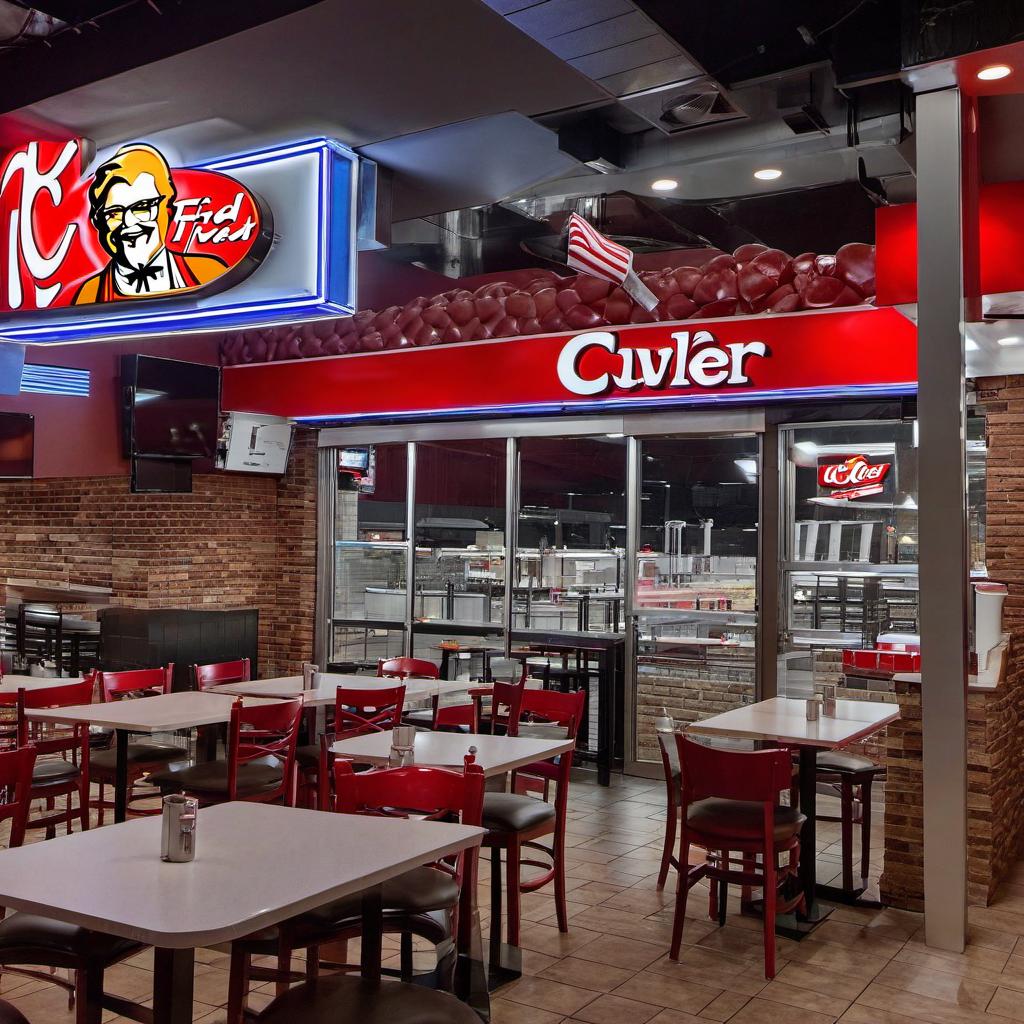
In my neck of the woods, there’s a restaurant chain called Culver’s, famous for their “concrete mixers” (custard shakes), and burgers billed as “butter burgers.” Delicious, but probably even more horrible for you than your average fast food burger, which is saying something. That said, I always assumed that the chain was just named after someone–and it is. But it turns out “culver” is also an actual word, and now that I know what it means, I’ll never be able to look at the restaurant the same way again…

culver, noun – a dove or pigeon

Learned from: Elden Ring (PC, Playstation 4, Playstation 5, XBox One, XBox Series X/S)

Developed by FromSoftware

Published by Bandai Namco Entertainment (2022)

FromSoftware games are known for being punishingly difficult, but also pretty dang weird sometimes. Case in point: Rennala, one of the main bosses of Elden Ring. When you first face her, she’s floating in the air, surrounded by a horde of half-formed…daughters, I guess? And she’s cradling something in her arms, cooing at it and calling it her “little culver.” It’s hard to really make out just what it is at first, but the whole situation is a bit creepy.

Regardless, I now have the irrevocable connotation that there’s a fast food chain that’s essentially called “Pigeon’s.” And I want to note, I in no way mean this to imply that Culver’s serves burgers made from pigeon meat (AKA: squab, so you’re getting a two-fer, today!). It’s just an unfortunate, and kind of amusing coincidence that their name happens to have another meaning.

KFC, however, I have my doubts about. (Pardon the AI art)

Cryptic messages in the Lands Between

As I write this, Elden Ring‘s DLC, Shadow of the Erdtree, drops in a little over a month, so I figured I should really get back to Limgrave and sharpen my skills. And, you know, maybe actually beat the game. Which brings us to today’s word.

baldachin, noun – the cloth canopy above a throne, or carried above an important person

Learned from: Elden Ring (PC, Playstation 4, Playstation 5, XBox One, XBox Series S/X)

Developed by FromSoftware

Published by Bandai Namco Entertainment (2022)

Early in the game, you unlock an area called the Roundtable Hold which acts as a sort of hubworld populated by a diverse array of NPCs. And in true FromSoft fashion, most of them are…ambiguously helpful at best. One of the, Fia, is a woman who came to be bound to this place due to “circumstances.” She also offers hugs, claiming she’ll receive the warmth of a warrior in exchange for what is surely a “baldachin’s blessing.” Possible minor spoiler: Hugging her might not be an entirely good thing to do.

Otherwise, Fia is pretty innocuous, and seems a rather sad figure. Not that anybody in a FromSoft game ever comes across as terribly happy, but there’s a special melancholy to her. Curiously, she doesn’t seem to have anything resembling a baldachin in her room, which makes her initial claim even more confusing. But while there’s no canopy, she does have a mirror in her room that the player can use to change their appearance, so she’s got at least some accoutrements.

FREE HUGS!

Please take me off your call list

I recently played through the first Dragon’s Dogma, in preparation for the sequel, and frankly, the game delighted me. Even with its massive amounts of janky moments, there was such an earnest heart behind it all, right down to a solid attempt at period-accurate Medieval dialogue. And I’m happy to say the sequel follows suit quite closely. Which brings us to today’s word.

roborant, noun – a tonic

Learned from: Dragon’s Dogma 2 (PC, Playstation 5, XBox Series X/S)

Developed by Capcom

Published by Capcom (2024)

Part of what I love about fantasy RPGs is that they so often unearth words that would have otherwise been lost to antiquity, and place them front and center before a modern audience. Even when the word in question somewhat confusingly sounds like slang that very same modern audience would have invented, themselves, perhaps around election season. Even though “roborant” only dates back to the 17th Century, and isn’t as period-specific as Capcom might have thought when deciding to use it, it’s still collected one hell of a lot of dust.

Here, it’s both a strong healing item, and the subject of an early quest involving a little girl who’s studying to become an apothecary, but she can’t afford a fruit roborant to further her studies. But, good ser, you are a hero, aren’t you? Mightn’t she impose upon your valiant sensibilities and kind heart, and ask you to procure one for her? Truly, what is a bit of coin, compared to furthering the education of the next generation of healers for her community?

I totally expected her to pick my pocket when I left to go pay for her school supplies. And no, I won’t spoil whether that happens or not.

Devious little reprobate, or budding credit to her community? You’ll have to find out for yourself.

Can you hear me now?

I had the day off today, and decided to use part of it to start one of the many, many Game of the Year contenders for 2023: Alan Wake II. And I didn’t even get into the game, proper, before it taught me a new word.

hyperacusis, noun – elevated sensitivity to sound, particularly environmental or background noise

Learned from: Alan Wake II (PC, Playstation 5, XBox Series X/S)

Developed by Remedy Entertainment

Published by Epic Games Publishing (2023)

I’d heard some cautionary tales about this games PC performance before picking it up, and it turns out there is some validity to those claims. It doesn’t run terribly, by any means, but I had to do more tweaking to get it at a decent, stable framerate than I did for other demanding games like, say, Returnal. But it was in poking around the options, that I stumbled across a toggle for a hyperacusis filter.

In the game, it seems primarily focused on reducing the amount of high-frequency background noises, like birdsong, that occur while you’re playing. So, in this instance, it seems like it’s less about reducing the amount of environmental noise as a whole, and more focused on high-pitched sounds. Either way, it’s nice to see this kind of accessibility option included, because I fully understand what it’s like to be bothered by certain types of sounds (in my case, it’s chewing noises).

I suppose I should talk a bit about the game, itself, even though I’m not terribly far yet. First things first, it would probably be a good idea to play the original Alan Wake before diving into this one. It might not hurt your experience too much, but the opening sequence involves a returning side character from the previous game, and you’d be missing a layer of the narrative by not having that past experience. Similarly, having a reference point to the town of Bright Falls, WA as it was, versus how it currently is in Alan Wake II will give you some insight that a new player might not have.

To explain, in the first game, Bright Falls was a less menacing version of Twin Peaks–there was something sinister going on in the background, sure, but the townsfolk, themselves, all seemed like genuinely okay people. If a bit odd. But in Alan Wake II? Something just feels…wrong in the town. It goes beyond some characters not fully recovering from what happened to them in the previous game, though that’s a factor too. But even in this early stage, walking through the town (as a new character, I might add: an FBI agent named Saga Anderson), I can’t shake the feeling that there’s a rot spreading just below the surface, and these people might not be the weird-but-trustworthy folks they once were. It’s a good start, and I look forward to seeing where it goes. High-pitched noises and all.

You can go in blind, but honestly the first game is still worth playing today, too.